
Pinyin, romaji, IPA — what the line under the word is telling you
Under a Chinese, Japanese or Korean word you may see two or three different spellings of the same sound. They answer different questions. What each one is for, and when to stop reading it.
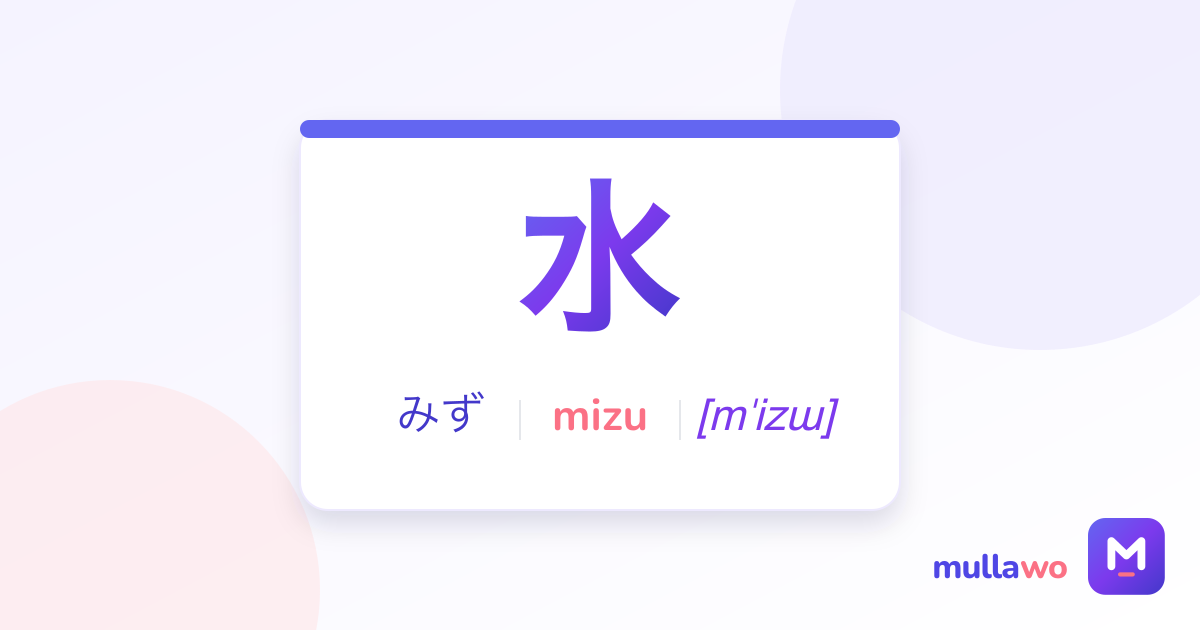
Look under a Japanese word in Mullawo and you may see three things on one line: みず mizu [mˈizɯᵝ]. Under a Chinese word, two: 橙色 chéngsè and a transcription in square brackets. They look like the same information written three ways. They are not, and knowing which is which saves a lot of confusion in the first months.
Three questions, three answers
IPA — how does it sound? The part in square brackets is the International Phonetic Alphabet: one symbol per sound, the same symbols for every language. It is the only one of the three that tries to describe the sound itself rather than a way of spelling it. Every language in Mullawo that has a transcription has an IPA one.
Romanization — how is it typed and taught? For Chinese, Japanese and Korean, Mullawo also shows the standard Latin spelling the language itself uses:
- Chinese — pinyin, with tone marks: 橙色 chéngsè (orange).
- Japanese — romaji: オレンジ色 orenji-iro.
- Korean — Revised Romanization, the official system in South Korea: 주황색 juhwangsaek.
This is what you type on a phone keyboard, what textbooks use, and what you see on signs and maps. It is a spelling system, not a sound description: zh in pinyin and eo in Korean do not mean what an English reader expects.
Reading — what is the word in its own sound script? Japanese only. A word written in kanji shows its reading in kana beside it: 水 → みず, オレンジ色 → オレンジいろ. That is the reading a Japanese reader would hear in their head — and, unlike romaji, it is Japanese.
Why they are kept apart
These used to sit in one field, and a card could show any of them in the same place. That is a problem for a learner: is mizu how it sounds, or how it is spelt? Is [mˈizɯᵝ] a different word?
So each now has its own place on the line, always in the same order — reading, romanization, IPA — and the line stays one line, so the word on the card does not jump when the card turns.
Which one to read
Chinese: pinyin, and take the tones seriously. The tone marks are not decoration. mā, má, mǎ, mà are four different syllables, and a word with the wrong tone is a different word or no word at all. Read the pinyin with its marks, say the word with the speaker, and treat the tone as part of the spelling. The IPA is there if a sound puzzles you — the difference between zh, j and z, say — but pinyin is what you will use every day.
Japanese: use the kana, and drop romaji as early as you can. Romaji is the fastest way into the first week and the slowest way through the first year. Hiragana and katakana are about a hundred signs together, and they are what the language is actually written in. Once you can read them, the reading line above the kanji is all you need and romaji becomes noise.
Korean: drop the romanization once you can read Hangul. That takes a week, not a year — see how Hangul works. After that, Revised Romanization only gets in the way: Hangul spells Korean more exactly than Latin letters can.
Every other language: IPA when you are unsure, the speaker always. For Spanish or Georgian the spelling already tells you most of the sound. For English, French or Portuguese it does not, and the IPA is the one honest guide to what the letters mean in this particular word. But no transcription replaces hearing the word — tap the speaker, and tap it twice to hear it slowly.
Turning it off
The whole line is one switch in Settings. Turn it off when the script itself is enough — after the first week of Hangul, once kana is automatic, or when you notice you are reading the Latin letters instead of the word. You can always turn it back on for a language you are just starting.
Chinese is the exception. Characters do not spell their sound, so there is no point at which the script alone tells you how to say a new word — keep the line on for as long as you are meeting new words.
What to do with this
- In the first weeks, read the line. It is a bridge, and bridges are for crossing.
- Learn the script that the language really uses — kana, Hangul — and stop leaning on romanization once you can.
- In Chinese, never drop the tone marks. They are the one part of pinyin you cannot do without.